
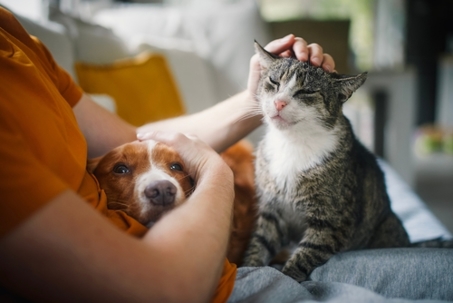
For many families, pets are not just animals; they are often regarded as beloved members of the household. When a relationship ends, pet owners naturally seek to understand what will happen to the family dog or cat. This varies depending on the family’s circumstances. Some parties believe that the pet belongs to the party who purchased/adopted it. Other families arrange for the pet to travel between residences with the children based on their parenting schedule. Families without children may also agree to have the pet follow a visitation schedule so that both parties remain able to enjoy their dog/cat.
How Does the Court Treat Pets in Family Law?
Surprisingly, despite how deeply people care about their pets, Ontario family law treats them as property and not as dependents who need custody and access orders made for them. Instead, the legal question ends up being much simpler and harsher: who owns the pet? As Coates v Dickson 2021 ONSC 992 makes clear: “However much we love our dogs, the law treats them as an item of personal property. The question is who owns the creature.” As such, if you and your partner fail to reach an agreement on how the pet will be taken care of post-separation, the court would apply property principles and decide the matter based on each party’s respective ownership claim over the pet. Whoever can prove a stronger ownership claim over the pet will likely have the advantage in the courtroom.
Ultimately, the court believes it is not a good use of resources to decide ‘pet custody’. This stands to reason why making an order for shared possession or visitation schedules for pets will generally be avoided by judges. Similar to regular property disputes, if ownership of the pet cannot be ascertained, the court may have no other choice but to order the pet to be sold and the proceeds divided accordingly.
Pets and Alternative Dispute Resolution
Although dogs and cats do not enjoy the same family law rights as children, many people believe that their pets do not deserve to be treated as property; they are much more important. Most families involved in pet-related family law disputes opt to address such issues proactively and thoughtfully, through negotiation and/or mediation. Since the courts are limited in what solutions they can offer, separating couples tend to have much more flexibility when they choose to create their own agreements. Not only does alternative dispute resolution save time and legal fees, but it can also reduce emotional distress for the parties by giving them greater control to create a suitable solution.
If you are navigating separation and have questions about property division or separation agreements as they relate to pets, speaking with a family law lawyer can help you understand your options better and protect what matters most to you.
Attention Legal Counsel: Professional Mediation Services
When your clients have reached an impasse in settlement discussions, Andrew Feldstein offers third-party mediation services specifically designed for cases where both parties have independent legal representation.
Why lawyers refer cases to Andrew:
- 30+ years family law litigation experience providing courtroom-informed reality testing
- Expertise in complex financial matters including business valuations and professional corporations
- Efficient, structured process that respects counsel's time and maintains client relationships
- Flexible scheduling including virtual mediation and travel to counsel offices
Cases we handle: Negotiation stalemates, complex asset division, support calculation disputes, parenting arrangements, multi-jurisdictional matters, and post-separation modifications.
Refer your next mediation: Call Andrew directly at 905-415-1635 ext. 255 or email info@separation.ca. Virtual and in-person sessions available throughout the GTA.