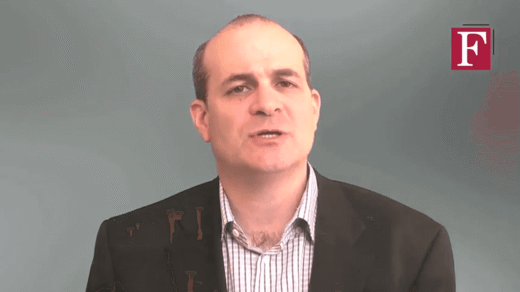
Hello, my name is Nick Slinko and I am an associate lawyer with Feldstein Family Law Group. Today I am going to speak about bankruptcy and property.
The interplay between the Family Law Act’s property division provisions and the Bankruptcy and Insolvency Act’s bankruptcy provisions are fraught with complications in the province of Ontario insofar as parties to a separation are concerned. A bankruptcy can greatly impact the rights and obligations stemming from a separation and there are a few key factors to consider when trying to assess the impact the bankruptcy of you, or your spouse, may have on the economics of the relationship breakdown.
Timing is key. The timing of a party’s assignment into bankruptcy is important in determining the regime of property division that applies to the parties. The most important factor? Whether the bankruptcy assignment takes place before or after the parties formally separate.
If the one party has been discharged from bankruptcy prior to separation, then a post-separation equalization claim is not affected by the bankruptcy. However, where the parties separate and one party files for bankruptcy post-separation prior to equalization being determined, then the bankruptcy does effect the determination of equalization. For example, say the party who owes an equalization payment files for bankruptcy, then the other party who is owed an equalization payment will likely be treated as an unsecured creditor. Even if that party ends up getting an order for equalization, he or she may be unable to collect on the payment because of his or her unsecured creditor status. An unsecured creditor, depending on the situation, can be very low in the pecking order as far as getting their money back. There is some good news here: there are ways to resolve this issue.
One option is to make a trust claim over property that may survive a bankruptcy, such as, a pension or an RSP (both of which, in some cases, make up a relatively large portion of one’s net family property). For your information, a trust claim is when one party seeks an interest in property that is registered in someone else’s name. As pensions and RSPs usually survive bankruptcy, a successful trust claim in such an asset will provide the non-bankrupt spouse with an interest in the asset, and thus the potential to actually realize on their claim. It is important to note, however, that trust claims are not always successful and there are various factors that go into establishing one’s interest, which is the subject of another blog altogether.
A second option, if you are denied an Equalization Payment that would otherwise be owed to you because of a claim for bankruptcy, would be to seek a larger amount of Spousal Support. If you are entitled to Spousal Support, you may be awarded a larger amount of Spousal Support than you would otherwise be entitled to receive, in order to address the inequity that arose when you were denied your Equalization Payment. This can be negotiated between the parties where there is an acknowledgement by both that the bankrupt party would otherwise have owed their spouse an equalization payment.
If you are considering bankruptcy, or you believe that your former spouse may be considering bankruptcy, it is important that you seek legal advice at the earliest possible time, as the timing of your claims may affect the ultimate distribution of property.
I’m glad that you could join me to today to discuss the topic of bankruptcy and property. As bankruptcy’s effects on property claims are very complex, this session is merely an introduction to some of the many issues that may arise upon a party’s assignment in bankruptcy and I therefore encourage you to schedule a consultation to discuss these issues in more detail. To book an appointment, please call 905-581-7222.
For the Feldstein Family Law Group, I’m Nick Slinko.
Thank you.